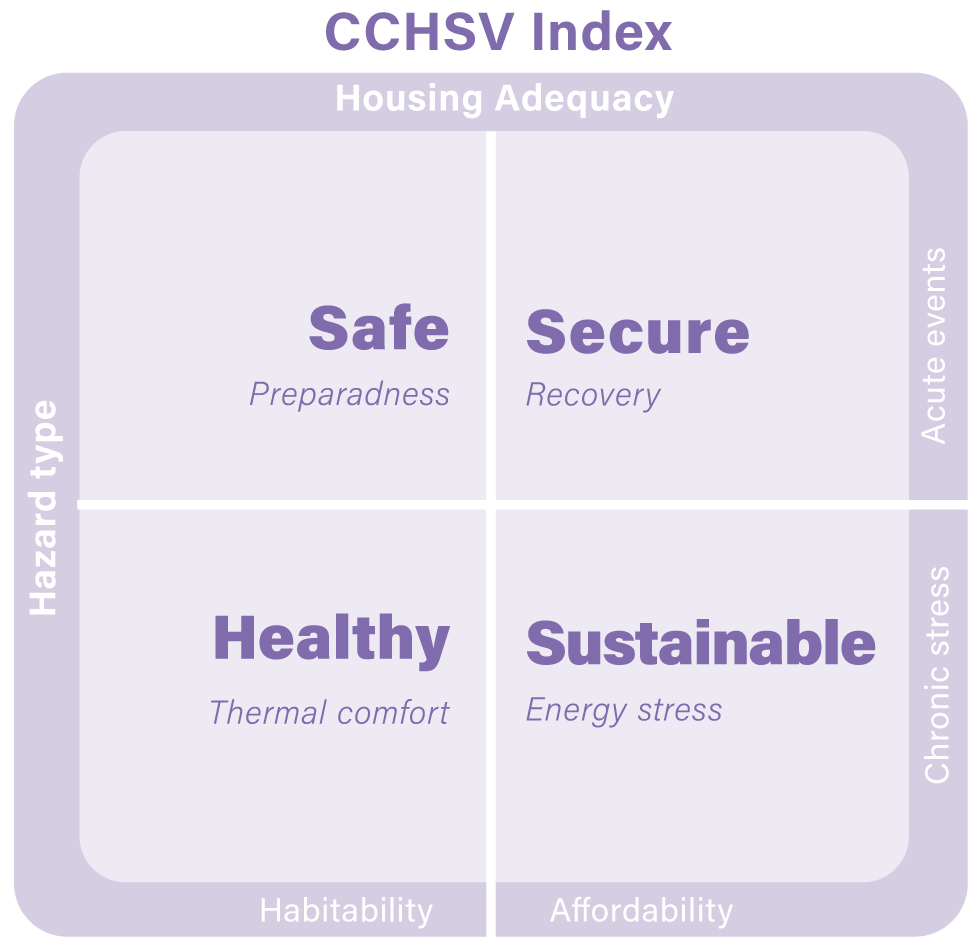
The CCHSV Index measures how vulnerable housing is to climate change by focusing on the aspects of a home that most determine whether it can protect the people inside it. It draws on the idea of housing adequacy, the recognised standard for what makes housing genuinely fit to live in.
In international human rights law housing adequacy covers a set of conditions, including secure tenure, access to services, an appropriate location, accessibility and cultural appropriateness. Two of these matter most once climate change is in the picture, and the index is built around them:
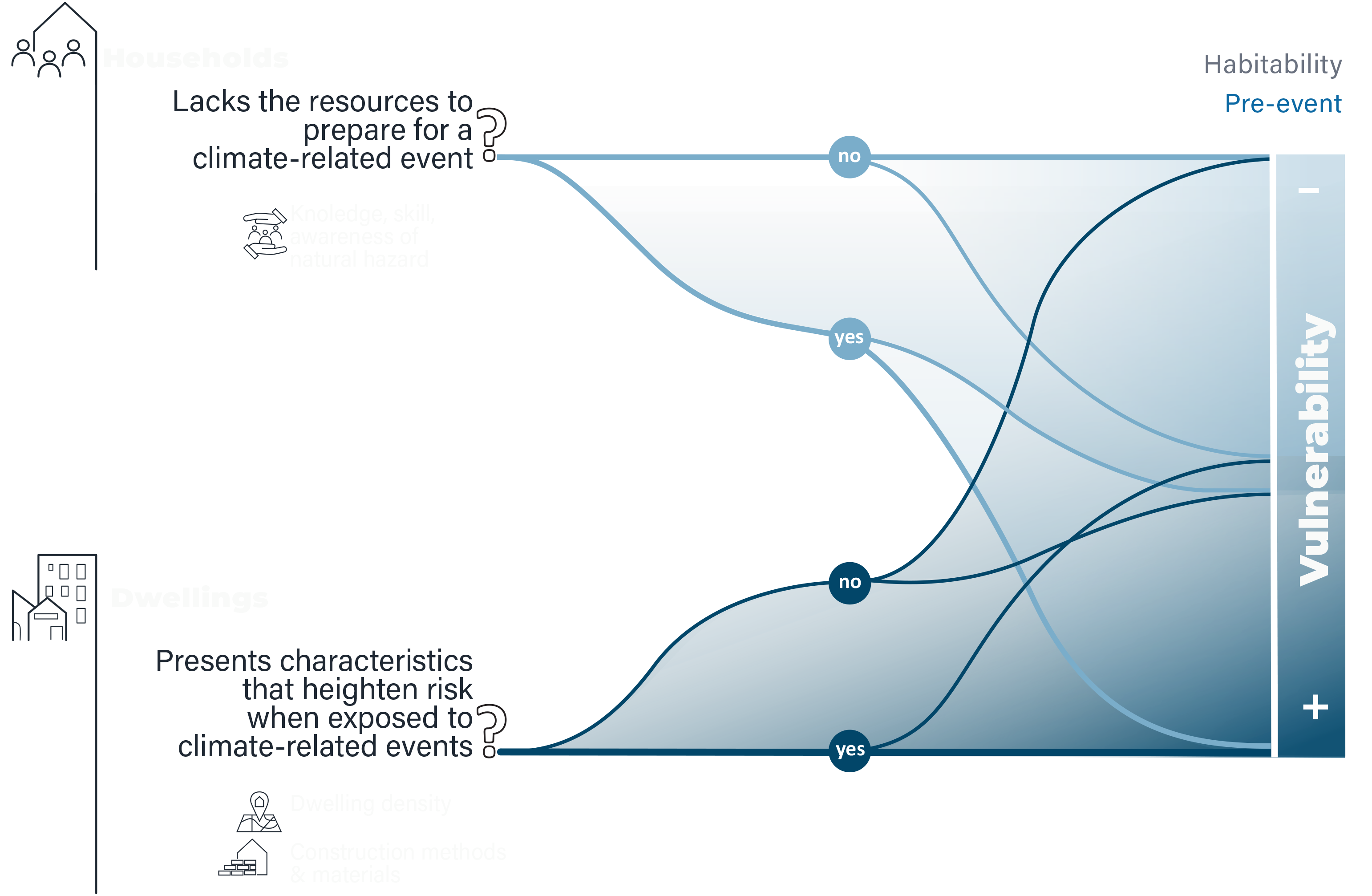
Habitability: whether a home is structurally sound, safe, and able to keep the people inside it healthy and comfortable. Climate change impacts it directly. A flood or bushfire can make a home unsafe within hours, while sustained extreme heat can make a poorly designed dwelling hard to live in over months and years.
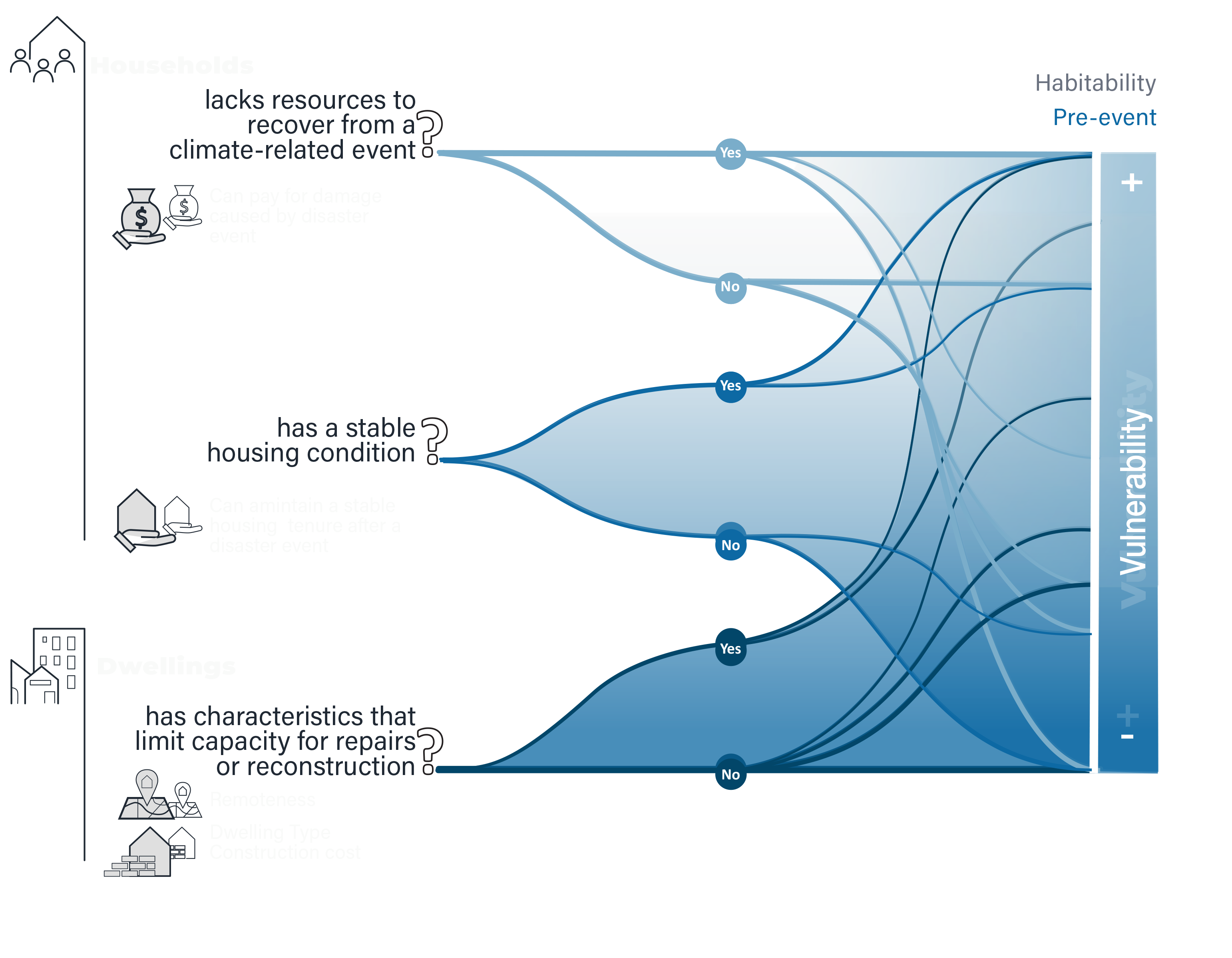
Affordability: whether a household can meet the costs of keeping a home adequate: repairing it, insuring it and running it, without being pushed into hardship. Climate change drives these costs up through disaster repairs, rising insurance premiums and the energy needed to stay warm or cool, and the pressure falls hardest on the households least able to absorb it.
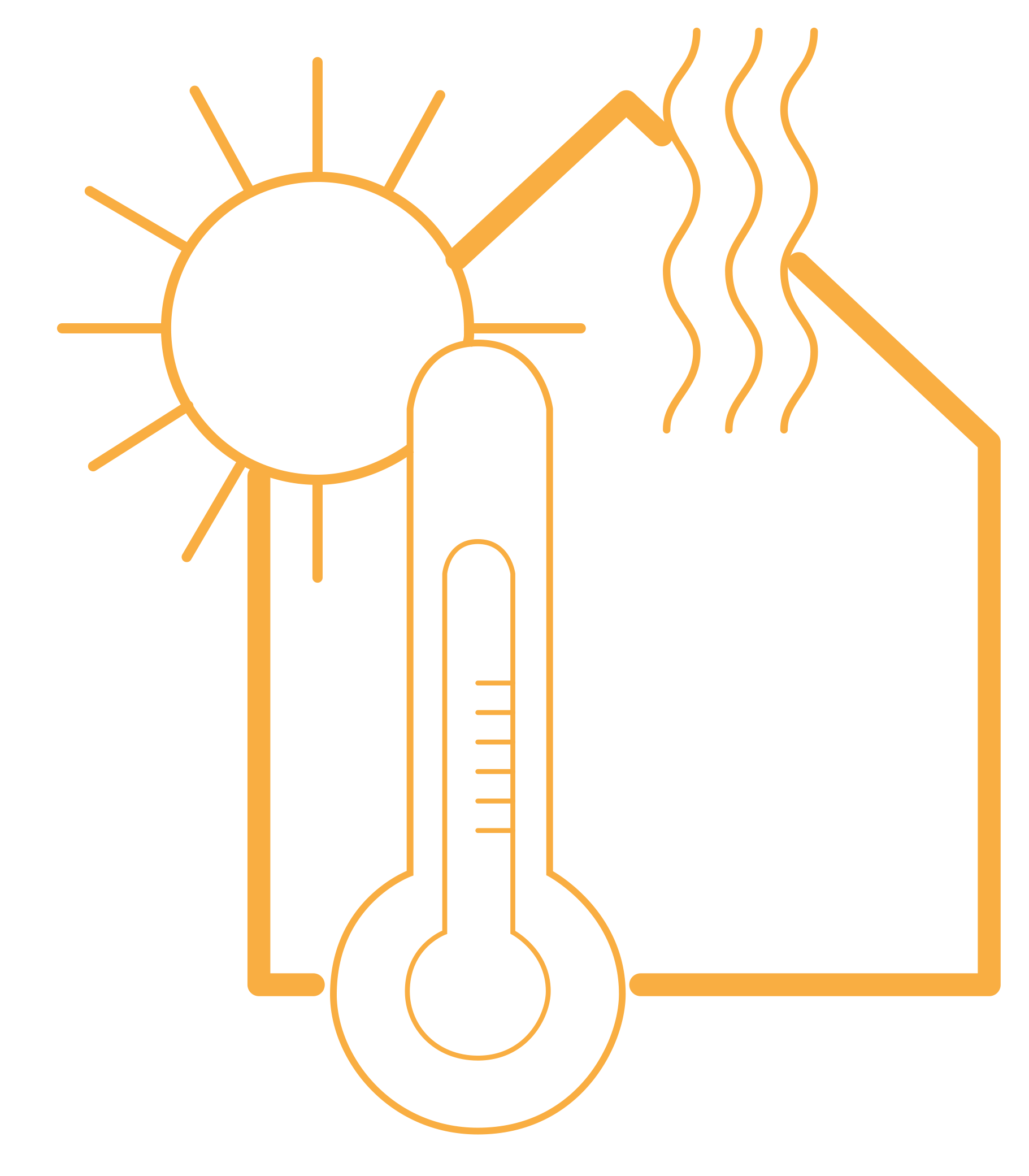
Climate change tests both foundations in two different ways: through sudden, acute events such as floods, bushfires and cyclones, and through slow, chronic stresses such as prolonged extreme heat. Pairing the two foundations with the two kinds of pressure produces the index's four dimensions: Safe, Secure, Healthy and Sustainable.