

About
How climate change impacts the housing system
Over the past decade, successive extreme events, including bushfires, cyclones, inland flooding, coastal inundation, and record heatwaves...
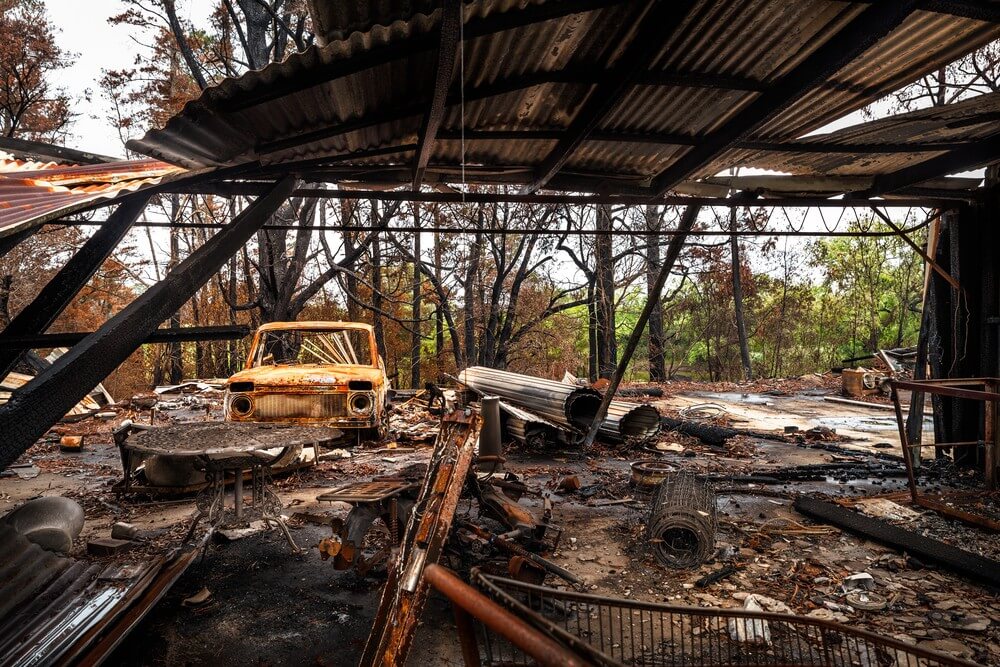
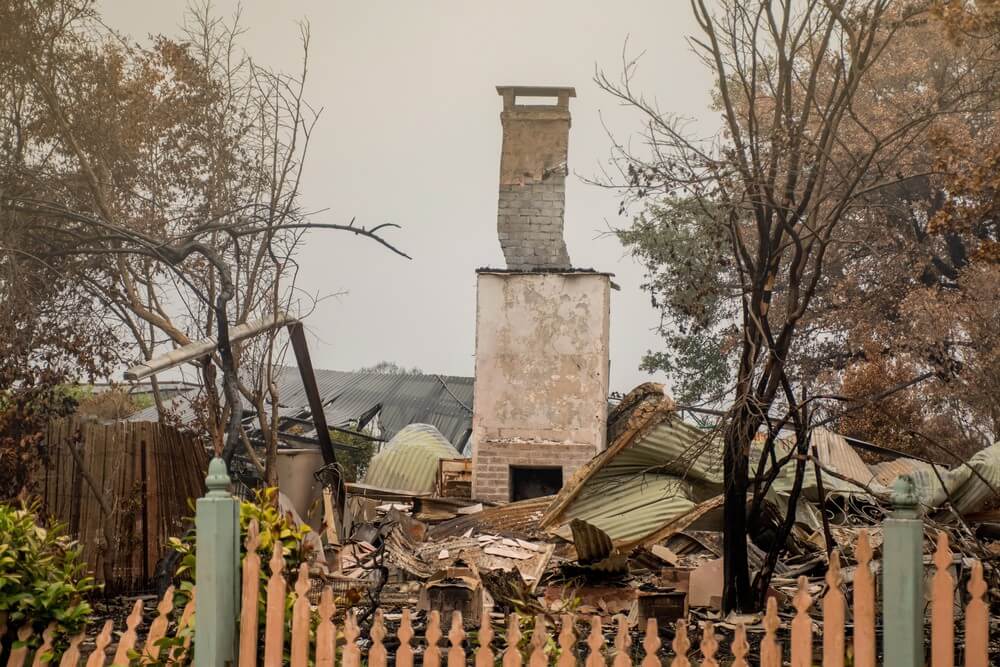
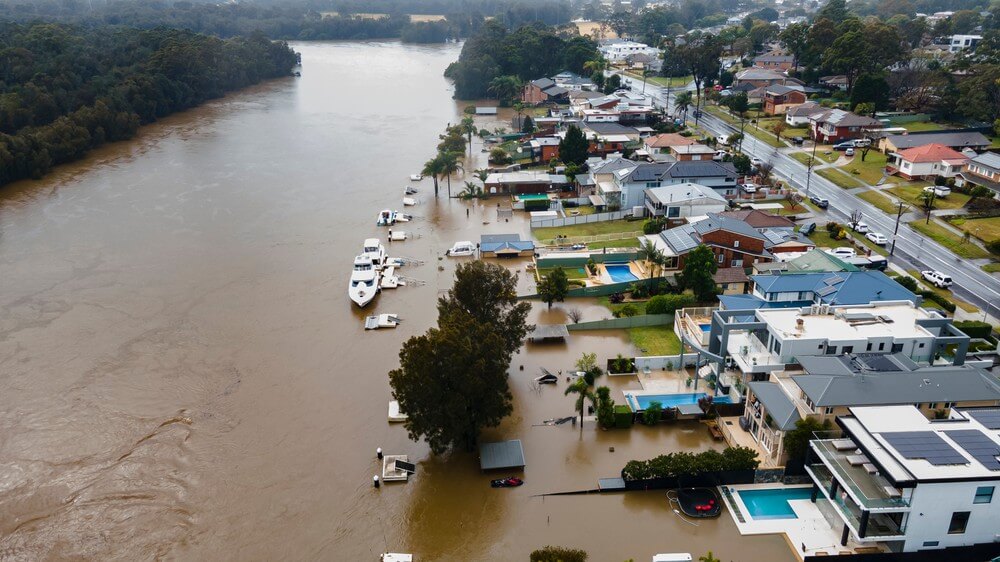
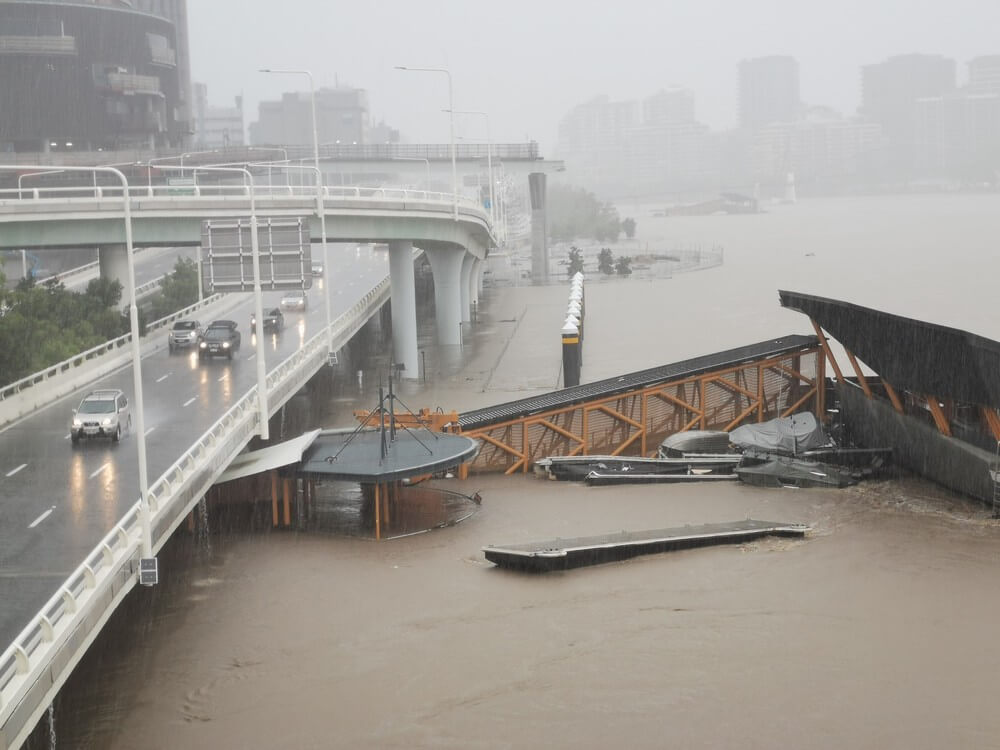
Over the past decade, successive extreme events, including bushfires, cyclones, inland flooding, coastal inundation, and record heatwaves, have exposed deep and persistent weaknesses in Australia's housing system. These events damage buildings and infrastructure, but they also reveal vulnerabilities built into the social, economic, and regulatory fabric of housing itself.
The housing system is more than the sum of the individual homes. It is the interplay of social, economic, and market forces that govern how housing is produced, distributed, and occupied, spanning construction, tenure types, the dynamics of supply and demand, and the market cycles and submarkets that shape where housing is available and what it costs. Within this system, the socio-economic circumstances of households and the physical characteristics of dwellings interact to determine who lives where, in what kind of home, and under what conditions.
This is why climate change is a housing-system problem. When a hazard strikes, the damage rarely stops at the dwelling. Insurers pull back from high-risk areas and premiums rise; property values come under pressure; households are displaced; and recovery costs fall on lenders and governments as well as owners; and demand begins to move away from exposed areas, while affordability barriers trap lower-income households there. A shock to one part of the system propagates to the others, which is why vulnerability must be understood at the system level.
Housing is also a central determinant of well-being. Homes provide protection, stability, and social connection, and are the foundation on which lives and communities are built. Climate impacts therefore disrupt far more than walls and roofs: they destabilise livelihoods, fracture communities, and impose long-term financial and emotional burdens. These effects are not evenly shared. For households on low incomes, or those with insecure tenure, disability, chronic illness, or limited social support, the consequences are far more severe. Climate change acts as a "risk multiplier," turning pre-existing disadvantage into acute and chronic vulnerability.
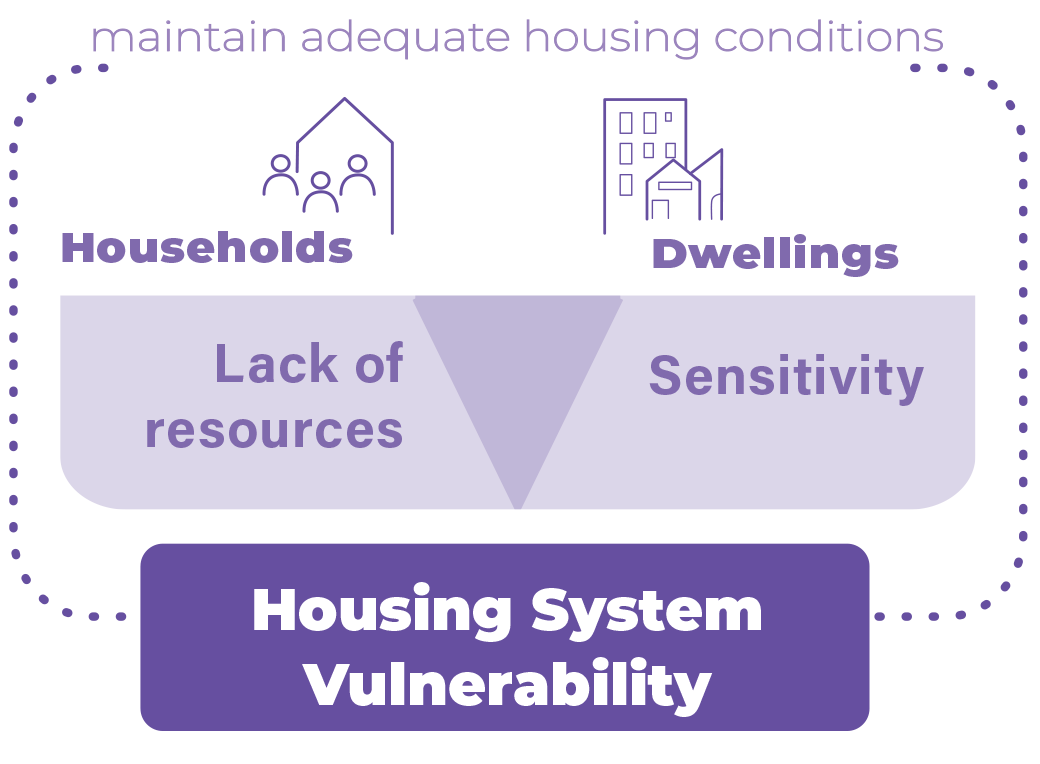
Housing System Vulnerability Conceptual Framework
The framework shows housing system vulnerability emerging from two interacting sources: households that lack the resources to prepare, adapt and recover, and dwellings that are physically sensitive to climate hazards. Where the two overlap, the system's capacity to maintain adequate housing conditions is undermined.
What do we mean by housing vulnerability?
Housing vulnerability refers to the degree to which households and dwellings are susceptible to harm when exposed to climate related events ....
Housing vulnerability refers to the degree to which households and dwellings are susceptible to harm when exposed to climate related events such as heatwaves, floods, bushfires or cyclones. It is not only about where hazards occur, but about the underlying social, economic and physical conditions that shape people's ability to cope, adapt and recover. Because these conditions exist before any flood, fire, or heatwave, they are also what policy can identify and act on in advance.
Housing vulnerability arises from two things working together: the household's circumstances, such as income, tenure security, health, and access to financial and social resources, and the characteristics of the dwelling, such as building quality, thermal performance, energy efficiency, and location. Neither side alone tells the full story. Vulnerability is greatest where limited household resources and a sensitive dwelling coincide. Where they do, households are far more likely to face displacement, ill health, or long-term housing stress as climate pressures intensify.
The Climate Change Housing System Vulnerability (CCHSV) Index measures this combination across four dimensions of housing adequacy: Safe, Secure, Healthy and Sustainable, which together capture how housing, as a system, copes under both sudden disasters and slow, ongoing climate stress.
From vulnerability to risk
The index measures vulnerability. On its own, though, vulnerability doesn't tell you where harm is most likely to occur...
The index measures vulnerability. On its own, though, vulnerability doesn't tell you where harm is most likely to occur: that depends on whether a vulnerable area is actually exposed to a hazard. To bridge this, we combine the index with hazard-exposure data to identify risk, the areas where high vulnerability and high exposure coincide. The following terms define the specific risk measures used, across both sudden (acute) events and sustained (chronic) heat.
Acute compound risk
Risk arising when housing highly vulnerable to sudden climate disasters is also highly exposed to them. It is identified by combining very high vulnerability on both the Safe and Secure dimensions (limited capacity to withstand an event and to recover from it) with high exposure to hazards.
Chronic heat risk
Risk arising when housing vulnerable to sustained heat is also exposed to it. It is identified by combining very high vulnerability on the Healthy and Sustainable dimensions with high cumulative heatwave exposure. It reflects the slow, repeated strain of frequent hot days rather than a single disaster.
Acute preparedness risk
Risk arising when housing poorly prepared to withstand a sudden climate disaster is also exposed to one. It is identified by combining vulnerability on the Safe sub-index (the dwelling's physical susceptibility and the household's capacity to withstand an event) with hazard exposure.
Acute recovery risk
Risk arising when housing poorly placed to recover from a sudden climate disaster is exposed to one. It is identified by combining vulnerability on the Secure sub-index (the household's financial capacity to recover and how costly or difficult the dwelling is to rebuild) with hazard exposure.
Thermal stress risk
Risk arising when housing whose occupants are vulnerable to sustained heat is also exposed to it. It is identified by combining vulnerability on the Healthy sub-index (the dwelling's thermal performance and the household's sensitivity to heat, through age, disability or chronic illness) with cumulative heatwave exposure. It reflects the physical and psychological health toll of repeated hot days rather than a single event.
Energy stress risk
Risk arising when housing that is costly to keep liveable is also exposed to sustained heat. It is identified by combining vulnerability on the Sustainable sub-index (the dwelling's energy performance and the household's capacity to bear ongoing heating and cooling costs) with cumulative heatwave exposure.
Why the CCHSV Index?
Climate change is not only increasing exposure to hazards like heat, floods and bushfires ....
Climate change is not only increasing exposure to hazards like heat, floods and bushfires; it is amplifying long-standing inequalities in housing markets, dwelling quality and access to resources. Yet existing national assessments of climate risk have not treated housing as a system in its own right; it is instead split across other domains such as infrastructure, communities, and health, so housing risk is never examined as an integrated whole. Most vulnerability measures also capture only one side of the problem: either the circumstances of households, or the physical condition of dwellings, rarely both. The result is a gap where we can say where hazards are most severe, but not reliably where the underlying conditions leave housing least able to withstand them, or why.
The CCHSV Index addresses this gap by measuring vulnerability directly: the pre-existing social, economic and physical conditions that shape whether the housing system can cope, adapt and recover. The index brings both sides of the problem into a single measure — household resources and dwelling sensitivity — across four dimensions of housing adequacy: Safe, Secure, Healthy and Sustainable. Applied consistently across the country, it shows not just where housing vulnerability is concentrated, but why, pointing to the specific conditions that drive it and the interventions most likely to reduce it.
Using the index
The CCHSV Index shows how vulnerable different places are to climate-related housing stress...
The CCHSV Index shows how vulnerable different places are to climate-related housing stress. Scores are calculated for small geographic areas and reflect the underlying conditions of the housing there, not the occurrence of any specific disaster. A higher score indicates greater vulnerability: households and dwellings in that area are more likely to be harmed if, and when, climate impacts occur.
The overall score combines the four dimensions: Safe, Secure, Healthy and Sustainable. Each captures a different aspect of vulnerability, spanning building quality and hazard preparedness, affordability and tenure security, health impacts, and energy performance. An area may score high on one dimension and low on another, and these differing profiles matter: two equally vulnerable places can call for very different policy responses.
A relative measure
Housing vulnerability has no fixed benchmark. Unlike income poverty, which can be set against an absolute threshold, there is no agreed line above which housing is simply "vulnerable." The index, therefore, measures vulnerability relatively: how each area compares with others across the country. Scores are grouped into five bands, from Very Low to Very High, with each band holding roughly a fifth of all areas. An area in the Very High band is among the most vulnerable nationally; areas in lower bands are still vulnerable, just comparatively less so. The bands rank places against one another not dividing the "vulnerable" from the non-vulnerable.
This is why the index is best read comparatively. Rather than focusing on an exact number, look for patterns, which place clusters at the high end, and which dimensions are driving their scores.
Used alongside climate hazard information, the CCHSV Index helps identify priority areas for targeted, preventative and equitable housing and climate policy, showing not only where to act, but which underlying conditions to address.